ICT Playbook
XAUUSD Trading Plan: Sessions, Volatility and Risk — Plan
A disciplined XAUUSD plan does not assume one session is always best. Mark the session and price levels to observe, check the event calendar and…
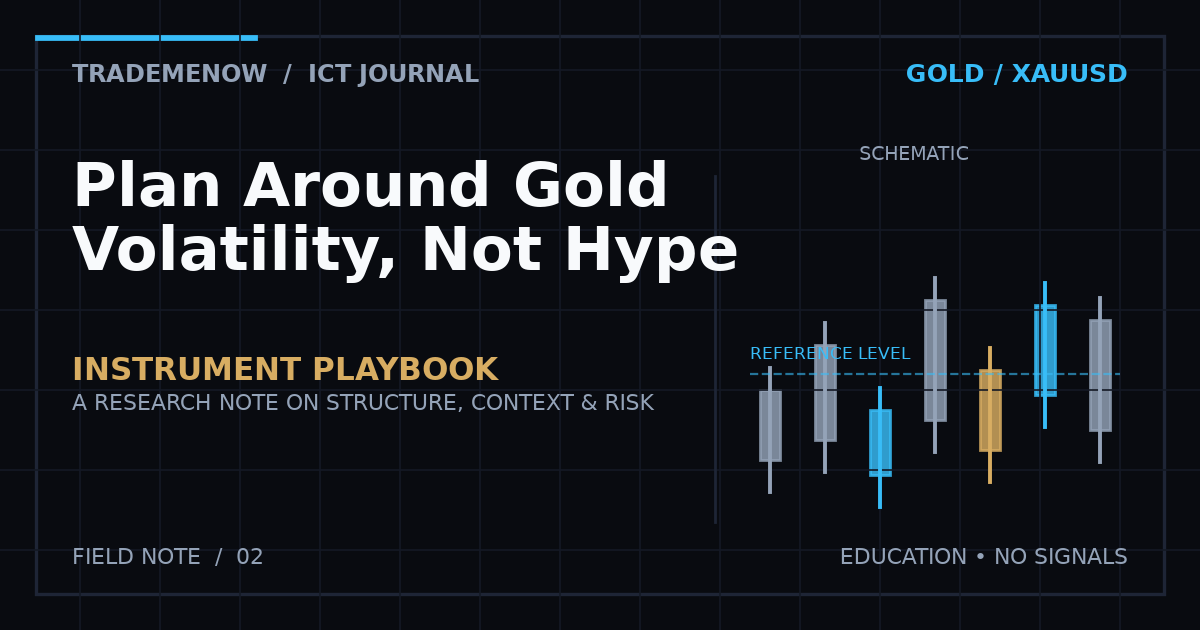
A disciplined XAUUSD plan does not assume one session is always best. Mark the session and price levels to observe, check the event calendar and broker spread, then wait for predefined structural evidence. Gold volatility can change abruptly; reduce or skip exposure when a sensible stop cannot be placed. Session hours shift relative to local time when daylight-saving rules change.
How can traders build an XAUUSD session plan?
A useful plan starts with conditions, not a claim that London or New York always offers the best setup. Gold responds to liquidity, the US dollar, yields, news and changing market conditions. ICT analysis can organize observations, but it cannot remove uncertainty.
1. Set context before the session
Mark the prior day's high and low, relevant ranges and higher-timeframe swings. Note whether price is inside a range or near an extreme. A level is an area to observe, not an entry instruction.
2. Convert session times for the actual date
Record session hours in their source time zone and convert them to your local time for the trading date. US and UK daylight-saving changes shift the offset. Recheck the calendar around seasonal changes rather than relying on a static table.
3. Check event and broker conditions
Before major releases, check spreads, slippage risk, broker hours and stop rules. XAUUSD contract specifications and maintenance windows differ by broker. A spot chart is not necessarily the execution quote on your account.
4. Wait for a sequence of evidence
One testable sequence might be: price approaches a level, sweeps a visible swing, shows displacement, then forms structure meeting predefined entry rules. If a condition is absent, the setup is incomplete. Do not force a pattern because a session is considered active.
5. Size from invalidation
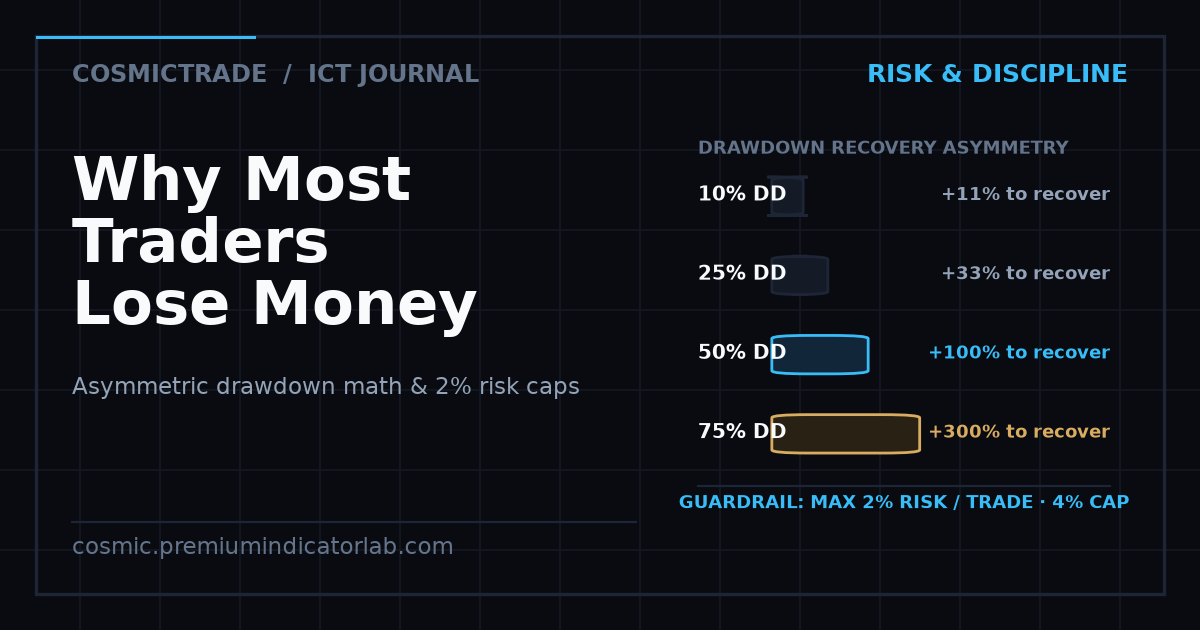
Set the invalidation level first. Position size depends on stop distance, contract value, account currency, spread and commission. CosmicTrade's policy caps per-trade risk at 2% and simultaneous exposure at 4% as system limits—not targets traders must use. Many traders choose much smaller risk.
XAUUSD FAQ
Is London or New York better for gold?
Neither is consistently best. Compare the same strategy rules on historical broker data, including spreads and slippage.
Is XAUUSD always volatile around US news?
No. Reaction depends on surprises versus expectations, liquidity and other conditions. A calendar flags event risk; it does not predict direction.
When should a trader wait?
When spreads widen, news is imminent, a reasonable stop is unavailable or structure is unclear. Read our killzone and AMD timing guide and 2% risk-management guide.
This is educational material, not a trade recommendation. Contracts, leverage and account protections vary by broker.
Skip a session when volatility makes invalidation too expensive for the risk you allow.
Test the concept without rewriting the story after outcomes
Create an observation sheet with date, instrument, timeframe, session, observed spread, market condition and rule version. Mark every qualifying opportunity before revealing the next candle. When using chart replay, proceed chronologically and hide future bars. Record cancelled opportunities too, so process adherence can be reviewed alongside financial outcomes.
After collecting a sample, check whether another reviewer can apply the rules and reach similar labels. Disagreement often reveals that words such as “strong,” “clean” or “obvious” remain subjective. Refine definitions in a new version and test it on data not used to design the rules. Do not repeatedly tune thresholds simply to improve historical results.
Report costs, spreads, fill assumptions, slippage and data limitations. A gross result that turns negative after costs is not evidence that a strategy is ready for live use. Separate descriptive findings from trading decisions.
Risk and limits of use
A price-structure example does not establish that a particular institution placed orders at a level; public charts do not reveal all spot order flow. Past movement also cannot establish future behavior. If readers test an idea, use simulation or a size consistent with risk tolerance, understand leverage and costs, and consider applicable local rules.
A consistent process can still experience losing streaks. Define drawdown limits, when to stop testing, and how to distinguish changing market conditions from execution errors. Do not try to recover losses by impulsively increasing size.